One potential nominee for the post vacated when Scalia passed away: federal appeals Judge Sri Srinivasan.
Srinivasan, a former clerk for Justice Sandra Day O’Connor, would be the
first Hindu and the first Asian American on the U.S. Supreme Court if
he were nominated and confirmed, the Washington Post
reports in a story about the Hindu faith. He was born in India and
moved with his family to the United States as a child. He was sworn into
the federal appeals court on the Bhagavad-Gita, a Hindu holy book.
Article here (via aba journal).

Showing posts with label Antonin Scalia. Show all posts
Showing posts with label Antonin Scalia. Show all posts
Monday, March 14, 2016

Monday, February 22, 2016
Finite terms for SCOTUS justices would solve problems, says editorial
The Washington Post’s editorial board sees a connection between life
tenure for Supreme Court justices and the “dysfunctional politics of
judicial nominations.”
In an editorial published on Sunday, the Washington Post says the Constitution relied on life tenure to strike a balance between democratic accountability and judicial independence. But that mechanism is failing, the editorial says.
Article here (via ABA Journal).
In an editorial published on Sunday, the Washington Post says the Constitution relied on life tenure to strike a balance between democratic accountability and judicial independence. But that mechanism is failing, the editorial says.
Article here (via ABA Journal).
Monday, February 15, 2016
In case you missed it: Supreme Court Justice Scalia has died
Justice Antonin Scalia, an influential advocate for an originalist view of the Constitution, died on Saturday at the age of 79.
The New York Times describes Scalia as “leader of a conservative intellectual renaissance” due to his “transformative legal theories, vivid writing and outsize personality.” He was nearing his 30th year on the court and was its longest serving current member, the National Law Journal (sub. req.) reports.
Article here (via aba journal).
The New York Times describes Scalia as “leader of a conservative intellectual renaissance” due to his “transformative legal theories, vivid writing and outsize personality.” He was nearing his 30th year on the court and was its longest serving current member, the National Law Journal (sub. req.) reports.
Article here (via aba journal).
Tuesday, October 14, 2014
Dissent makes strange companions: Ginsberg, Scalia and Thomas join in dissent
"Cert" or certiorari, is the process whereby the US Supreme Court decides whether to hear a case. A party -- who has already had a ruling from a "lower" court -- has to petition the US Supreme to hear the case. This is called a "petition for certiorari." When the justices review a case, but decide not to hear any oral argument, they deny its certiorari (which leads to its being "cert denied").
Justices can, but most often do not, write a dissent against cert being denied. Why? Because the justices would be writing them all the time. The vast majority of cases that are appealed to the US Supremes are denied.
So it's unusual for justices to write a dissent about denial of a cert petition. And it's more rare still when justices Ginsberg, Scalia, and Thomas, who usually have such otherwise- opposing view points, join in that dissent.
 Article here.
Justices can, but most often do not, write a dissent against cert being denied. Why? Because the justices would be writing them all the time. The vast majority of cases that are appealed to the US Supremes are denied.
So it's unusual for justices to write a dissent about denial of a cert petition. And it's more rare still when justices Ginsberg, Scalia, and Thomas, who usually have such otherwise- opposing view points, join in that dissent.
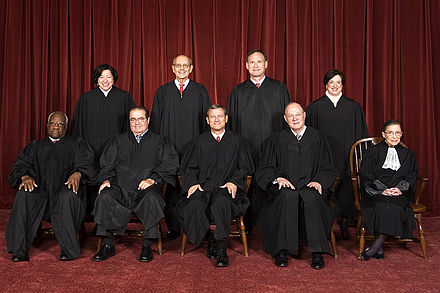
Justice Antonin Scalia wrote the dissent (PDF), joined by Justices Clarence Thomas and Ruth Bader Ginsburg. “The present petition presents the nonhypothetical case the court claimed to have been waiting for,” Scalia wrote.
Jurors had convicted three drug defendants in the case for distributing small amounts of crack cocaine, but acquitted the defendants of conspiring to distribute drugs. The sentencing judge nonetheless found that the defendants had engaged in the conspiracy and, relying largely on that finding, calculated guidelines ranges that were much higher than for distribution convictions.
“Petitioners present a strong case that, but for the judge’s finding of fact, their sentences would have been ‘substantively unreasonable’ and therefore illegal,” Scalia wrote. “If so, their constitutional rights were violated.
Subscribe to:
Posts (Atom)