Showing posts with label Ruth Bader Ginsberg. Show all posts

Tuesday, October 14, 2014

Dissent makes strange companions: Ginsberg, Scalia and Thomas join in dissent

"Cert" or certiorari, is the process whereby  the US Supreme Court decides whether to hear a case. A party  -- who has already had a ruling from a "lower" court -- has to petition the US Supreme to hear the case. This is called a "petition for certiorari." When the justices review a case, but decide not to hear any oral argument, they deny its certiorari (which leads to its being "cert denied").

Justices can, but most often do not, write a dissent against cert being denied. Why? Because the justices would be writing them all the time. The vast majority of cases that are appealed to the US Supremes are denied.

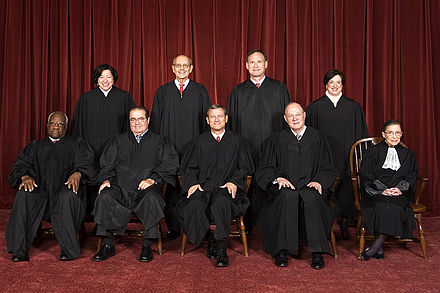
So it's unusual for justices to write a dissent about denial of a cert petition. And it's more rare still when justices Ginsberg, Scalia, and Thomas, who usually have such otherwise- opposing view points, join in that dissent.
Article here.

Justice Antonin Scalia wrote the dissent (PDF), joined by Justices Clarence Thomas and Ruth Bader Ginsburg. “The present petition presents the nonhypothetical case the court claimed to have been waiting for,” Scalia wrote.

Jurors had convicted three drug defendants in the case for distributing small amounts of crack cocaine, but acquitted the defendants of conspiring to distribute drugs. The sentencing judge nonetheless found that the defendants had engaged in the conspiracy and, relying largely on that finding, calculated guidelines ranges that were much higher than for distribution convictions.
“Petitioners present a strong case that, but for the judge’s finding of fact, their sentences would have been ‘substantively unreasonable’ and therefore illegal,” Scalia wrote. “If so, their constitutional rights were violated.

Thursday, October 2, 2014

When should a judge recuse herself? Justice Ginsberg puts her role in debate.

Recusal is when a judge "sits out" on a case that she would otherwise have heard. It can happen voluntarily - she decides that her interest in a case client would injure her impartiality, or involuntarily -- when an attorney for a party motions the court to recuse. It's part of due process, which means that a case should be heard by a fair an impartial judge.

Comments made by Justice Ruth Bader Ginsburg in a magazine interview have reignited a long-simmering ethical debate confronting the Supreme Court over when a justice ought to sit out a case.

In a New Republic interview published Sunday, Justice Ruth Bader Ginsburg was asked by legal scholar Jeffrey Rosen if state lawmakers could be trusted to safeguard abortion rights.

Article here.  (via WSJ lawblog).