The United States Court of Appeals for the Sixth Circuit recently
released a published opinion holding that the plaintiffs, four
self-described "Juggalos" and two members of the band Insane Clown
Posse, had standing for their claims against the US Department of
Justice and the FBI that they suffered violations of their First and
Fifth Amendment rights.
Article here (via Speaker law firm blog).
This case arose out of a Congressional report for the National Gang Intelligence Center. Back in 2001, the report determined that Juggaloes are in fact, members of a gang, although loosely organized. In return, some Juggaloes filed suit, claiming that this had a chilling effect on their First Amendment rights to association.
Showing posts with label First Amendment. Show all posts
Saturday, October 3, 2015
Tuesday, July 7, 2015
The Dignity of Gay marriages was part of SCOTUS decision: Will that bring about "dignity codes" which are against the First Amendment?
A George Washington University professor says "perhaps."
Article here (via aba journal).
George Washington University law professor Jonathan Turley says the opinion recognizing the dignity of gay marriage could pave the way for dignity codes that trump free-speech rights.
Turley says “the most direct way” the majority could have upheld a right to gay marriage in Obergefell v. Hodges would be to find that sexual orientation is a protected class under the 14th Amendment’s equal protection clause. That would have made a refusal to issue gay-marriage licenses illegal discrimination, and would have clarified the standard in areas such as employment discrimination and refusal of public accommodations, Turley says.
Article here (via aba journal).
George Washington University law professor Jonathan Turley says the opinion recognizing the dignity of gay marriage could pave the way for dignity codes that trump free-speech rights.
Turley says “the most direct way” the majority could have upheld a right to gay marriage in Obergefell v. Hodges would be to find that sexual orientation is a protected class under the 14th Amendment’s equal protection clause. That would have made a refusal to issue gay-marriage licenses illegal discrimination, and would have clarified the standard in areas such as employment discrimination and refusal of public accommodations, Turley says.
Thursday, May 29, 2014
Free speech ruling at US Supreme Court: anti-President protestors can't claim viewpoint discrimination
Presidential protestors can't claim that Secret Service agents used viewpoint discrimination, and thus caused a violation of free speech.
Article here.(via WSJ Law Blog).
Or, in other words, the safety of the president comes above the free speech rights of those protesting against him (or her), and the agents who are protecting that president are shielded by immunity from a free-speech claim.
Article here.(via WSJ Law Blog).
Or, in other words, the safety of the president comes above the free speech rights of those protesting against him (or her), and the agents who are protecting that president are shielded by immunity from a free-speech claim.
Wednesday, May 14, 2014
Here they go again: Grand Rapids seeks to re-write panhandling ordinance
From an article on mlive:
Although the City Attorney Catherine Mish supports the proposed ordinance by comparing it to Kentwood's, it remains to be seen how this is different from the earlier ordinance that was declared unconstitutional.
This is a probably an attempt by the city to make the ordinance fall under what's called "Time, Place, and Manner," guidelines. In other words, it's OK for a city to restrict some exercise of free speech, if they only attempt to do it by restricting the time, place, or manner that the exercise happens. To make an example, if protestors want to gather, that's fine, but they can't impede pedestrian traffic (place and manner); or the protests can't happen after 8:30 at night (time). The US Supreme Court has said that these restrictions are OK because they are reasonable (impeding pedestrian traffic would be unsafe, or after 8:30 at night would be infringing another's right to quiet, etc.)
And lastly, in an aside to the City Commissioners and the others behind this ordinance, you can't clean a city by getting rid of panhandlers. If you (Commissioners) think this is a problem, go to another city, where it's really a problem.
Though a federal court has ruled that panhandling is a First Amendment right, the city plans to restrict the activity by making it illegal to ask for money from motorists.
A proposed law up for Grand Rapids City Commission review on Tuesday, May 13, also would prohibit panhandling in certain locations and ban certain tactics deemed too aggressive.
Among the rules:
• no solicitation in an “accosting” manner, or by continuing to beg after a person has refused the request
• no solicitation within 15 feet of a public restroom
• no solicitation within 15 feet of an ATM machine, or a building that has an ATM in it
• no solicitation on a public bus or within 15 feet of a bus stop
• no solicitation from anybody waiting in line to enter a building, like at Van Andel Arena
• no solicitation from any driver or passenger on a public street
Although the City Attorney Catherine Mish supports the proposed ordinance by comparing it to Kentwood's, it remains to be seen how this is different from the earlier ordinance that was declared unconstitutional.
This is a probably an attempt by the city to make the ordinance fall under what's called "Time, Place, and Manner," guidelines. In other words, it's OK for a city to restrict some exercise of free speech, if they only attempt to do it by restricting the time, place, or manner that the exercise happens. To make an example, if protestors want to gather, that's fine, but they can't impede pedestrian traffic (place and manner); or the protests can't happen after 8:30 at night (time). The US Supreme Court has said that these restrictions are OK because they are reasonable (impeding pedestrian traffic would be unsafe, or after 8:30 at night would be infringing another's right to quiet, etc.)
And lastly, in an aside to the City Commissioners and the others behind this ordinance, you can't clean a city by getting rid of panhandlers. If you (Commissioners) think this is a problem, go to another city, where it's really a problem.
Tuesday, March 25, 2014
Hobby Lobby, First Amendment, questions and answers
Michigan lawyer, are you prepared to answer your lay friends' and
neighbors' questions about Hobby Lobby and a business's First Amendment
freedom of religion rights? No?
Go here . . . . or here.
(via state bar of Michigan blog).
Go here . . . . or here.
(via state bar of Michigan blog).
Monday, November 11, 2013
Friday, October 11, 2013
Legislation to stop cyber-bullying?
Legislation to stop cyber-bullying usually arises in response to a very bad thing happening, like a teen's suicide. Legislators then feel the need to get involved, and put a stop to it with a new law. The problem is, the laws -- while having very good intentions -- are written in an overbroad fashion and violate First Amendment rights. This article explains a recent law in Maryland.
An even bigger problem with this law is that it will allow school officials the ability to interfere with user content. From the article:
Maryland school officials will be offered the chance to flag “questionable or prohibited” language. That is to say, they will flag speech that isn’t prohibited by the new law but which they deem “questionable.”
I can't foresee any problems with this, you?
What's my expectation of privacy in a cellphone call?
From the article: "The FBI says it uses the tools to track the locations of individual suspects. But the technology is controversial because, by design, it collects data on innocent bystanders’ phones, and it also interferes with cellphone signals in a way that may be prohibited under a section of the federal Communications Act."
Thursday, October 10, 2013
Bring your guns, but leave your signs.
Bring your guns, but leave your signs. A second amendment rally at the Capitol building seemed to be contradictory: gun rights advocates could carry their weapons openly, but had to leave their signs behind. This is because of a rule protecting the historic interior of the Capitol building. Article here.
Michigan was in the spotlight last year because of a law that passed allowing weapons in previous weapon-free zones (schools, churches, daycare, and sports arenas), which was then vetoed by Gov. Rick Snyder. Gun supporters were at the Capitol asking lawmakers to support the proposal again this session.
Panhandling - now legal in Michigan after law is held unconstitutional
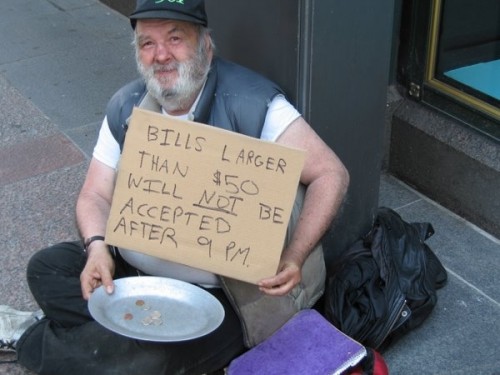
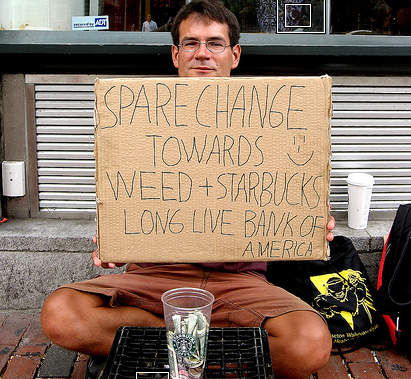
A Michigan state law that banned panhandling has been struck down as unconstitutional. Article here. The law infringed on First Amendment rights of panhandlers.
The ACLU of Michigan said that “the state’s anti-begging law is unconstitutional because peaceful panhandling – like requests for charity by nonprofits, sport teams or the Salvation Army — is protected speech under the First Amendment.”
Subscribe to:
Posts (Atom)